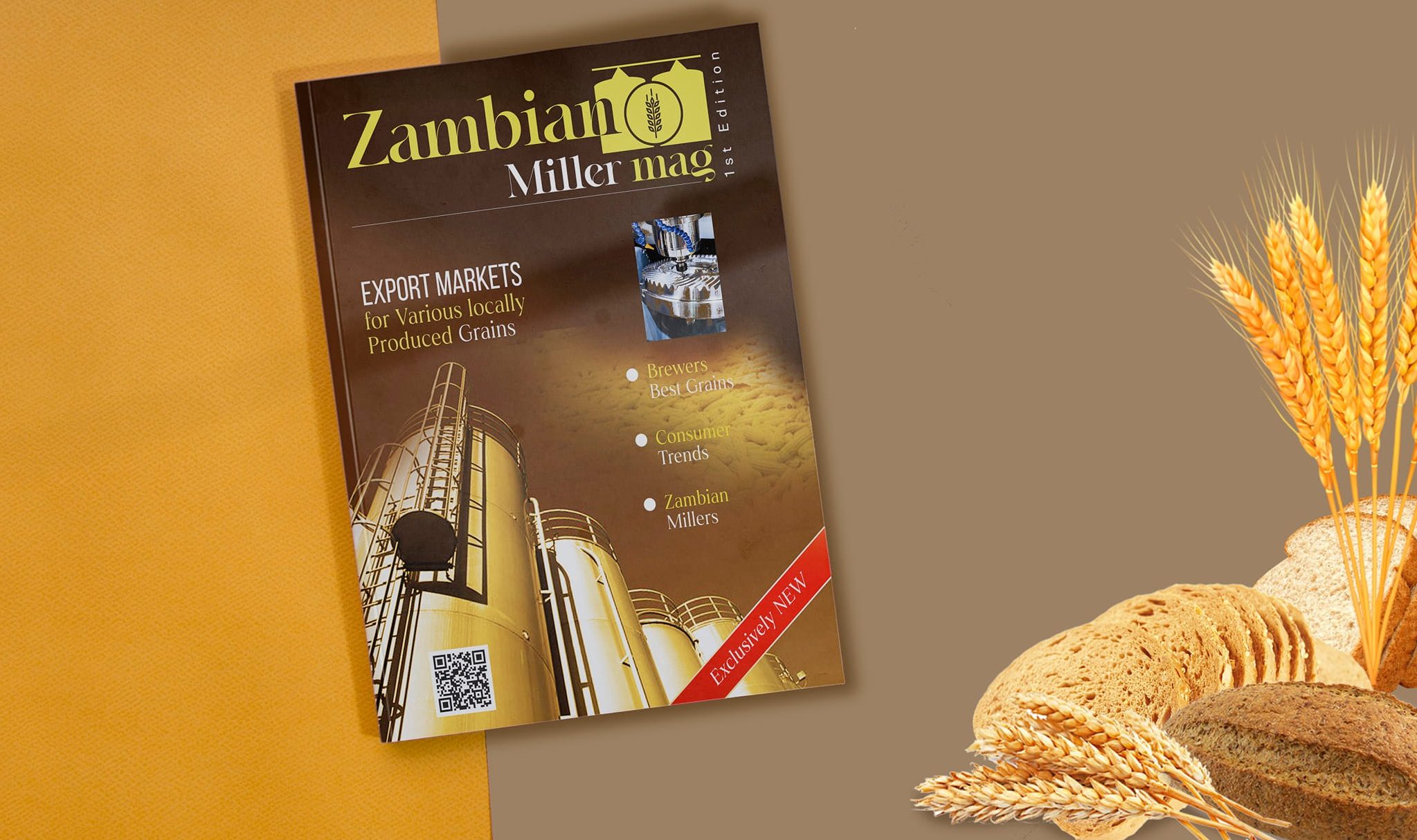


Zambia is reasserting its position as a regional grain supplier, with renewed efforts to expand exports to the Democratic Republic of the Congo (DRC) as the country anticipates another strong agricultural season in 2026. Backed by improved production, favorable weather conditions, and growing regional demand, Zambia’s grain sector is entering a decisive phase of commercial scaling one that connects surplus production to one of Africa’s largest consumer markets.
Zambia’s maize production has rebounded significantly following the drought-affected 2024 season. According to recent agricultural forecasts, maize output for the 2025/2026 marketing year is projected at approximately 3.6–3.7 million metric tonnes, marking a historic recovery.According to USDA and Zamstats, total grain supply is estimated at over 4.04 million metric tonnes, against national requirements of about 3.54 million metric tonnes, resulting in a surplus of over 500,000 metric tonnes.
This surplus positions Zambia to:
- Resume structured exports
- Stabilize regional food supply chains
- Strengthen its agricultural trade balance
With consistent rainfall patterns and expanded cultivation, early projections suggest 2026 could sustain or exceed these production levels, reinforcing Zambia’s export readiness.
The Democratic Republic of the Congo remains Zambia’s most strategic export destination for grain due to its structural food deficit and rapidly growing population. A Population exceeding 100 million people, rapid urbanization increasing dependence on market-supplied food and limited domestic grain production capacity has been major key drivers.
The demographic pressure within the DRC creates a persistent demand gap for staple foods, particularly maize and mealie meal. Zambia, with its geographic proximity and surplus production, naturally fills this gap.
Zambia presents a contrasting demographic and economic profile that supports surplus generation:
- Population: ~22.6 million (2025–2026 projections)
- Over 50% of the workforce engaged in agriculture
- Smallholder farmers contribute approximately 90%+ of maize production
This structure allows Zambia to:
- Scale production through widespread smallholder participation
- Maintain national food security while generating exportable surpluses
- Leverage government-supported programs such as input subsidies and FRA purchasing
The Zambia–DRC corridor is one of the most active informal and formal grain trade routes in Africa.
Current Trade Characteristics
- Continuous cross-border structural exports, especially maize
- Strong presence of informal trade networks
- Increasing shift toward formalized, government-sanctioned exports
The DRC is already a major trade partner, accounting for a notable share of Zambia’s regional exports and forming a critical part of its non-traditional export markets.
Agriculture remains a strategic pillar of Zambia’s diversification agenda:
- Agricultural products account for over 27% of non-traditional exports
- Maize and maize-based products are increasingly contributing to export earnings
- Export expansion supports foreign exchange generation beyond copper
As Zambia pushes toward industrialization of its food systems, grain exports to the DRC are evolving from:
“Surplus disposal” → “structured regional trade strategy”
The viability of sustained exports depends on logistics and infrastructure:
Key Enablers
- Road networks linking Copperbelt to southern DRC
- Trade corridors such as the Lobito Corridor (emerging strategic route)
- Expansion of storage and aggregation facilities
Critical Gaps
- Post-harvest losses (estimated at ~5% for grains)
- Limited modern silo infrastructure
- Need for digital tracking and quality assurance systems
Despite export expansion, Zambia continues to maintain a cautious policy stance:
- Strategic grain reserves managed by the Food Reserve Agency (FRA)
- Export approvals tied to surplus thresholds
- Government pricing interventions to protect both farmers and consumers
This dual approach ensures:
- Domestic price stability
- National food security
- Sustainable export growt
The 2026 export expansion presents high-impact opportunities:
Aggregation & Storage
- Investment in modern silos and climate-controlled storage
- Moisture and aflatoxin control technologies
Value Addition
- Exporting mealie meal and fortified products instead of raw maize
- Processing for urban DRC markets
Logistics & Trade Structuring
- Bulk handling systems
- Cross-border trade finance mechanisms
Digital Transformation
- Real-time grain inventory systems
- Predictive demand analytics for export planning
Zambia’s expansion into the DRC market reflects a broader shift toward regional food systems integration.
With:
- Strong production recovery
- Favorable demographic positioning
- Growing regional demand
Zambia is increasingly emerging as:
- A grain export hub for Central and Southern Africa
- A food security anchor in the SADC–COMESA region
- A candidate for agro-industrial transformation at scale
Editorial Perspective
The anticipated 2026 bumper harvest is not just about increased output it is about what Zambia does with it.
The real opportunity lies in:
- Structuring exports
- Strengthening value chains
- Embedding technology and infrastructure into agriculture
In doing so, Zambia moves beyond being a producer toward becoming a regional food systems leader.