
By 2031, Zambia aims to produce 10 million metric tonnes of maize. But the real question is not whether the country can grow that much grain — it is whether it can store it, market it, and protect its quality well enough to transform surplus into national prosperity.

Zambia’s agricultural sector is entering a decisive decade.
With ambitious national targets to significantly increase maize production, the country is positioning itself to become not only food secure, but a regional grain powerhouse for Southern and Central Africa. Increased productivity is already being driven through improved seed systems, mechanization, input support programmes and expanding commercial farming.
Yet history offers an important lesson: bumper harvests alone do not guarantee economic success.
In several seasons, surplus maize has coincided with falling prices, storage shortages, delayed market access, and post-harvest losses. These experiences reveal a critical truth agricultural transformation does not end at production.
It begins there.
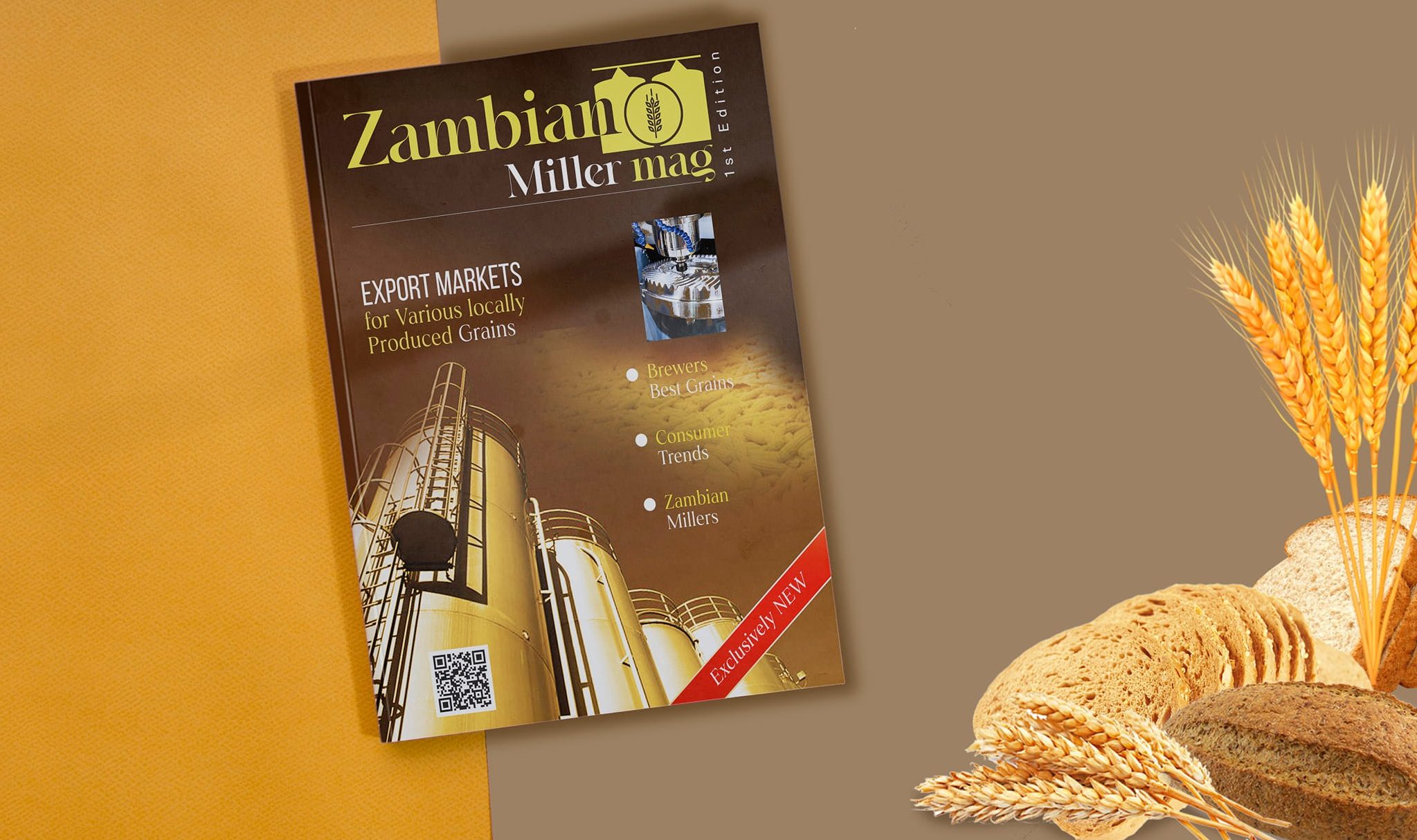
The Zambian Miller joined Mr. Hector Hamusankwa-Delivery Specialist at Presidential Delivery Unit on Agriculture
Evaluating Surplus Opportunity and the Risk
Our surplus harvest presents both promise and pressure.
‘On the positive side, increased production strengthens national food security, improves farmer incomes, and opens export opportunities. However, without strong systems to manage excess supply, the same surplus can strain infrastructure, depress market prices, and create fiscal burdens for government through large-scale grain purchases” Hamusankwa
The difference between opportunity and risk lies in one factor: system’s capacity.
If Zambia is to sustain production growth toward 10 million tonnes, the country must transition from a production-focused agricultural model to a market-oriented grain economy supported by modern infrastructure.
Storage as the Silent Pillar of Food Security

Grain storage rarely attracts public attention, yet it is the backbone of any successful agricultural system.
Current storage capacity in Zambia includes a combination of public reserves, private facilities and on-farm structures. While these systems have supported national needs to date, projected production growth will require substantial expansion.
Modern grain storage does more than preserve harvests. It enables:
- Market timing flexibility
- Price stabilization
- Reduced post-harvest losses
- Strategic national reserves
- Export readiness
Decentralized aggregation centers near production zones, improved drying facilities, and modern bulk handling systems will be essential components of future infrastructure development.
Without adequate storage, surplus grain becomes vulnerable both economically and physically.
Quality and Safety: The Currency of Competitive Markets
As Zambia positions itself as a regional grain supplier, quality will determine market success.
Poor post-harvest handling can lead to moisture damage, pest infestation, and aflatoxin contamination — all of which reduce value and may block access to premium export markets.
Maintaining grain quality requires investment across the value chain:
- Mechanical drying technologies
- Hermetic storage solutions
- Laboratory testing capacity
- Farmer training in post-harvest practices
- Traceability systems
High-quality grain is not just safer it is more profitable. In competitive regional markets, quality becomes a form of economic currency.
Beyond a Single Buyer: Evolving Grain Marketing Systems
For many years, the Food Reserve Agency (FRA) has played a central role in maize marketing, providing a guaranteed buyer for smallholder farmers and supporting national food reserves.
This role remains important.
However, as production scales upward, reliance on a single institutional buyer becomes increasingly unsustainable. A diversified marketing ecosystem is necessary to absorb growing volumes efficiently.
A modern grain market should include:
- Private sector traders
- Commodity exchanges
- Warehouse receipt systems
- Agro-processing industries
- Regional export channels
When multiple buyers compete, farmers benefit from better price discovery and improved market access.
Policy Reform and Investor Confidence
Infrastructure investment does not occur in a vacuum it depends heavily on policy predictability.
Proposed reforms to food reserve management and agricultural marketing frameworks are expected to create clearer operating rules, strengthen governance, and reduce uncertainty for private investors.
Stable policy environments encourage long-term capital investment in storage facilities, logistics networks, and processing industries.
In the absence of predictability, investment slows regardless of production potential.
Turning Maize into Industrial Growth
A 10 million tonne maize economy has implications far beyond grain trading.
Surplus maize can power expansion across multiple industries:
- Poultry and livestock feed manufacturing
- Aquaculture production
- Food processing industries
- Starch and ethanol production
- Industrial manufacturing inputs
This linkage between agriculture and industry is where true economic transformation occurs.
Rather than exporting raw grain alone, Zambia can build value chains that create jobs, generate foreign exchange, and stimulate rural economies.
Regional Markets: Zambia’s Strategic Advantage
Zambia’s geographic position offers direct access to several structurally food-deficit markets across the region.
Neighbouring countries frequently require maize imports due to climatic variability and production shortfalls. With efficient logistics and reliable storage systems, Zambia can become a dependable regional supplier.
However, export competitiveness depends on:
- Consistent grain quality
- Efficient transport corridors
- Stable export policies
- Adequate storage capacity
Regional leadership in grain trade is achievable but not automatic.
The Farmer at the Center
Amid discussions of infrastructure and markets, one stakeholder remains central: the farmer.
Improved storage and marketing systems directly affect farmer livelihoods by:
- Reducing post-harvest losses
- Increasing bargaining power
- Allowing delayed sales when prices improve
- Enabling access to credit through stored
Zambia Miller 2026 17.02.2026