




Dalian JustLong Imp.& Exp. Co., Ltd


330 followers
June 22, 2026
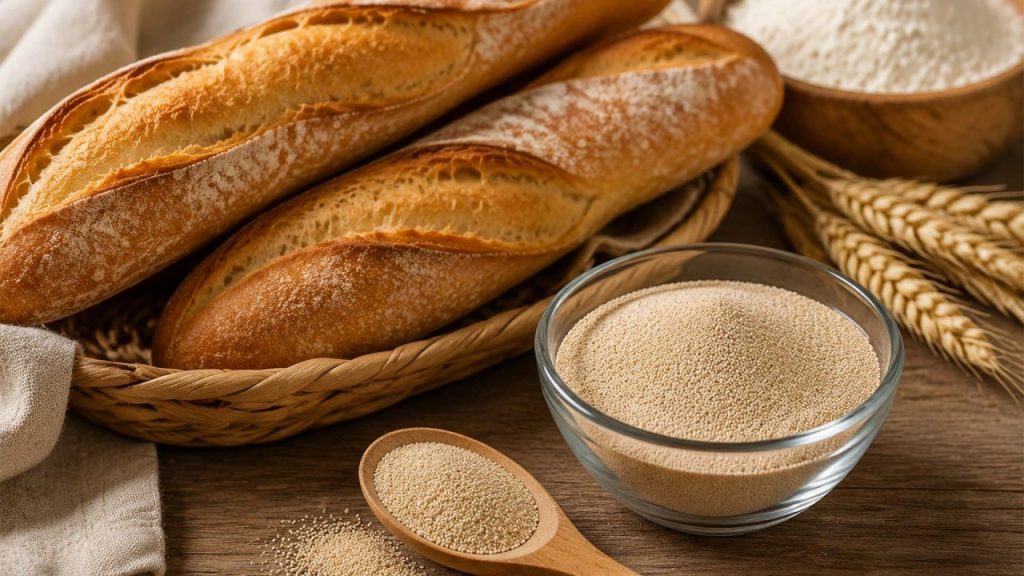
The firmness or softness of a baguette is a complex texture resulting from the combined effects of its ingredients, fermentation process, and baking technique. Yeast, as one of the four basic ingredients, plays an indispensable role in determining the bread’s volume, the softness and elasticity of its internal structure (crust), and its flavor. However, the baguette’s signature firm crust is primarily attributed to the choice of flour, the dough’s hydration content, and its unique baking method.
I. Defining the Firmness or Softness of a Baguette: Not a Single Physical Attribute
Before discussing the influencing factors, it’s important to clarify that the “firmness” and “softness” of a baguette refer to two different textures. A high-quality baguette should have a firm, crisp crust and a moist, soft, and resilient internal structure (crust), exhibiting honeycomb-like air pockets of varying sizes. Therefore, the firmness or softness of a baguette discussed in the baking field is actually a collective term for the crispness of its crust and the softness of its internal structure. If a baguette becomes dry and hard to chew after cooling, or if its crust becomes soft and lacks crispness, it indicates a defect in the manufacturing process.
II. The Core Role of Yeast: The “Engine” Determining Volume, Texture, and Flavor
The primary responsibility of yeast in baguette making is biological leavening. By metabolizing sugars in the dough to produce carbon dioxide gas, yeast causes the dough to expand, forming the bread’s porous and airy structure. Its impact on baguette texture is mainly reflected in the following three dimensions:
Precise Control of Yeast Usage: The amount of yeast used in baguette dough is far lower than in other soft breads. In professional recipes, the yeast content is typically only 0.1% to 0.4% of the total flour. This lower yeast usage, combined with a longer fermentation process, is to avoid excessive gas production and over-fermentation, resulting in insufficient expansion and a coarse or dense texture after baking. Some suggest that the yeast usage can be controlled at around 0.2%, adjusted according to the specific recipe and desired flavor.
Control of Yeast Activity and Fermentation Degree: Yeast activity directly affects the final volume and internal texture of the bread. In home baking practice, there are cases showing that if the baking time is too long, causing yeast activity to decrease in the latter half, it will lead to insufficient final fermentation. The result is insufficient rising power in the baguette after baking, leading to a less full shape and smaller internal air pockets than ideal. This indicates that ensuring the baguette’s activity at the appropriate temperature (ideal dough temperature 22-24℃) and time is a prerequisite for forming a soft, porous crust, regardless of whether fresh yeast, active dry yeast, or instant dry yeast is used.
Contribution to flavor and shelf life: Byproducts of yeast fermentation (such as organic acids and alcohols) not only impart a rich wheat aroma and layered texture to the baguette but also influence its hardening rate. Using natural yeast (sowing starter) or prolonged low-temperature fermentation (such as 4℃ for 12-18 hours) produces more complex flavor compounds and helps delay the aging of the bread’s internal structure, allowing it to retain its moist texture for a relatively longer time after baking.
Therefore, yeast, through its metabolic activity, directly shapes the soft, springy texture and flavor layers inside the baguette. However, it is not the primary creator of the baguette’s hard crust.
III. Key Factors Determining Baguette Hardness: The Synergistic Effect of Flour, Moisture, and Baking
The hardness and crispness of the baguette crust primarily depend on the type of flour, the moisture content of the recipe, and specific baking techniques.
Flour Type Sets the Foundation: Traditional baguettes often use French T65 or T55 flour with a high ash content. The protein content and gluten strength of this type of flour differ from the high-gluten flour used for soft bread, resulting in a crust that browns more easily and is more resilient. The ash content of the flour affects the rheological properties of the dough and the coloring reactions during baking (Maillard reaction and caramelization), providing the material basis for the formation of a hard crust.
High Moisture Content Grants Inner Softness: Authentic baguette dough typically has a high moisture content, generally between 68% and 70%, or even higher. During baking, the high-moisture dough generates a large amount of steam, creating an expanding force that results in a soft texture and large porous structure beneath the crust. Without sufficient moisture, the interior of the bread will be dry, hard, and dense.
Steam and High-Temperature Forging of a Crispy Crust: This is the most crucial process in forming a hard crust. It is essential to inject a large amount of steam into the oven during the initial stage of dough baking. The high-temperature steam adheres to the surface of the dough, preventing the crust from drying out and thickening during the early stages of expansion, thus allowing the dough to fully expand and unfold. When the steam supply stops, the dry, high temperature of the oven (usually 230-250°C) rapidly evaporates the moisture from the surface of the dough. The starch, previously softened by the steam, gelatinizes and dehydrates, ultimately forming a thin, glassy, hard, crisp crust.
Influencing Factors | Effect on “Soft Inside” | Effect on “Hard Crust”
Yeast | Core Role: Produces gas, supports the structure, and forms a soft, fluffy bread core. | Indirect Role: Sugars produced during fermentation participate in the coloring reaction, but are not the primary cause of a hard crust.
Flour | Provides the gluten network, traps gas, and forms the framework. The ash and protein properties of flour type (e.g., T65) affect crust toughness and color.
Moisture: High moisture content (68%-70%) ensures internal moisture and creates large pores. Steam during the initial baking stage prevents premature hardening of the crust; later dehydration forms a hard shell.
Baking: High temperature causes gas expansion, fixing the texture. The combination of steam and high temperature is the direct means of forging a hard and crisp crust.
IV. Differentiation between Hardening and Process Defects: It is important to distinguish between normal process characteristics and excessive hardness caused by production failure.
Normal Cooling and Hardening: Freshly baked baguettes have an extremely crisp crust and a very soft interior. As they cool, residual moisture migrates outwards, and the crust absorbs a small amount of moisture, slightly reducing crispness, but a high-quality baguette’s crust remains firm. If left for too long (several hours to a day), significant internal moisture loss and starch retrogradation occur, causing the bread to become dry and hard overall. This is a normal physical phenomenon and is unrelated to yeast.
Abnormally hard baguettes due to process defects: If a baguette becomes dry and hard shortly after baking, making it difficult to chew, it usually stems from errors in other processing steps, such as:
Insufficient fermentation: The dough is not fully matured, requiring a longer baking time to brown, leading to excessive moisture evaporation and a dry, hard texture.
Insufficient steam: Insufficient steam creates an ineffective crust that sets too early and becomes too thick, limiting expansion and resulting in a small, dense texture.
Overbaking: Excessive baking time or low temperature causes significant moisture loss.
Conclusion: In summary, the hardness or softness of a baguette is a complex result of multiple factors. Yeast plays a crucial role in driving fermentation, determining whether the bread has a soft, porous, and flavorful internal structure. However, the baguette’s signature hard, crisp crust primarily depends on the choice of high-ash flour, a high-hydration dough formula, and, most importantly, a high-temperature steam baking process. The texture of a baguette is actually the product of a delicate balance between biological fermentation and physical thermodynamic processes. The absence of any one of these processes will disrupt this balance, making it impossible to create a baguette that is “crispy on the outside and soft on the inside”.